Mixed-media texture studies: collage, pastel, and imprinting
Mixed-media texture studies: collage, pastel, and imprinting
Texture studies can be extended beyond drawing and paint by incorporating collage, pastel rubbings, and direct imprinting. Each method offers a different way to hold on to the tactile qualities of a subject. The following studio note compares these approaches and suggests short exercises to explore how they can be combined effectively.
Collage as collected texture
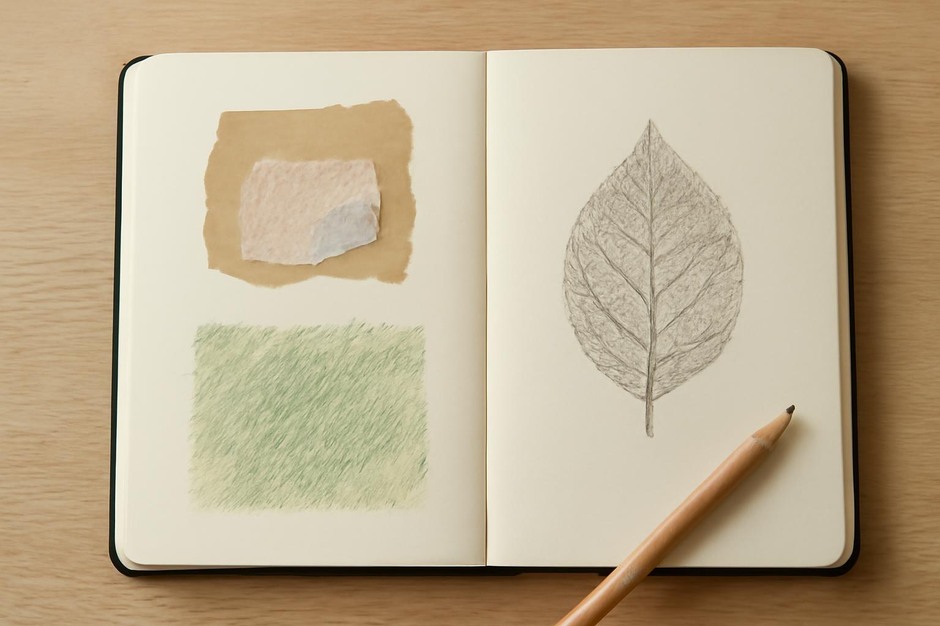
Collage gathers bits of material that carry texture: torn paper, dried leaf fragments, bark strips, even small scraps of fabric. Collage records the physical presence of the site and can act as a catalogue of materials as well as a compositional experiment.
- How to work: collect small non-living fragments responsibly, prepare a backing page, and experiment with arrangement and scale. Use glue sparingly to preserve surface qualities.
- What it trains: compositional thinking in relation to actual materials and the tactile interplay of different surfaces.
Collage is especially useful when studying textures that resist conventional rendering, such as layered lichens or flaky bark. The physical object supplies information that a drawing alone might omit.
Pastel rubbing and drawing
Soft and oil pastels can be effective for capturing immediate colour and textural impressions through rubbing and direct application. Rubbing transfers texture details onto a surface in a way that conveys both colour and grain.
- How to work: place textured materials under a page and rub with soft pastel to reveal the relief. Alternatively, apply pastel directly to suggest roughness and scuff lightly with a cloth to create subtle breaks.
- What it trains: attention to colour-gesture and the tactile quality of mark-making; useful for energetic, expressive studies.
Pastel work is portable but can be messy and is best protected with fixative or folded pages in a sketchbook.
Imprinting and frottage
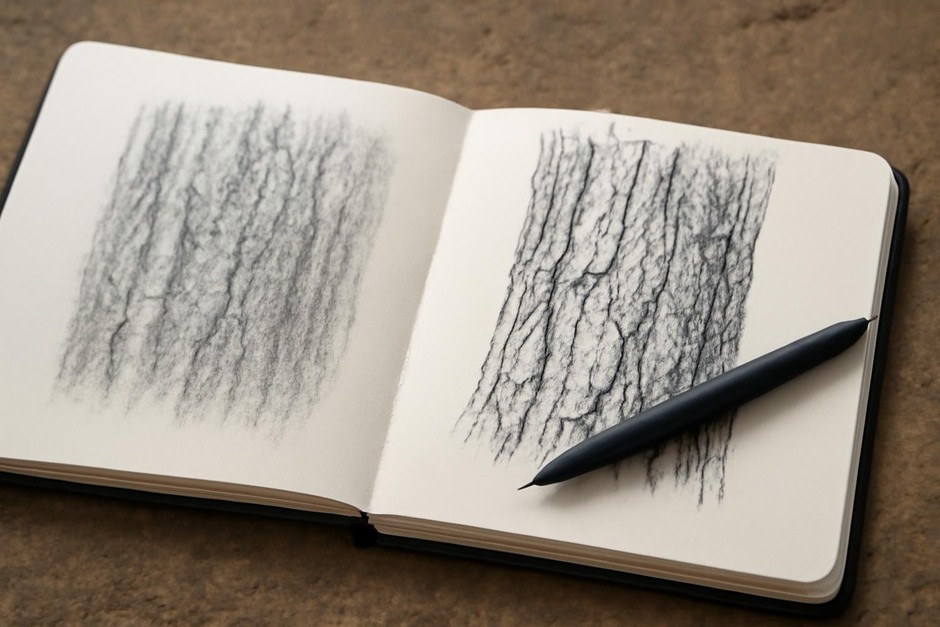
Imprinting—pressing paper onto a textured surface, or vice versa—captures relief in a way similar to rubbings but allows variety in pressure and media. Frottage, made famous in the twentieth century, is simply a systematic rubbing that can be used as raw texture data or an expressive pattern.
- How to work: use thin paper over a surface and draw with a broad, soft medium, or press inked surfaces onto paper for a transferred texture.
- What it trains: sensitivity to relief and to the qualities that differentiate surfaces beyond visual colour.
Imprints can be surprising; they reveal negative spaces and patterns that might not be obvious at first glance.
Combining materials
Mixed-media textures are most compelling when methods are chosen for complementary effects. For example, start with an imprint to record relief, add pastel rubbings to capture local colour and grain, then finish with collage elements to anchor the texture physically. The collage can supply scale or a contrasting surface; pastel can harmonize colour; imprint gives a faithful record of relief.
Be mindful of scale and weight. Heavy collage pieces can overwhelm a page and obscure subtleties; delicate imprints may be lost when pasted over. Keep small test studies to explore combinations before committing to larger pages.
These methods are valuable because they expand what a sketchbook can hold: not just marks but objects, impressions, and layered evidence of a place. Treat the sketchbook as a laboratory where tactile experiments accumulate. Over time, a modest set of mixed-media habits will produce a rich, physical archive of surfaces and a more embodied way of remembering the places you observe.