Compositional frameworks for nature journaling: thumbnails, grids, and panoramic strips
Compositional frameworks for nature journaling: thumbnails, grids, and panoramic strips
Organizing a page before or during observation makes field records clearer and easier to use later. Three simple compositional frameworks — thumbnails, grids, and panoramic strips — each support different aims. This studio note compares their practical uses and offers short exercises to try in the field.
Thumbnails for idea exploration
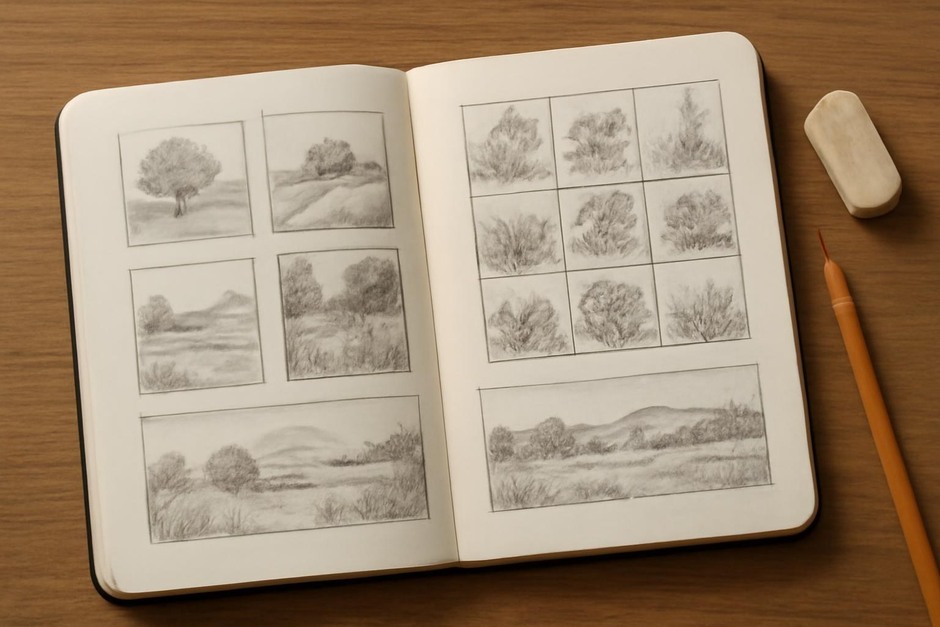
Thumbnail sketches are small, quick compositions that test arrangements of value, rhythm, and focal points. They are the visual equivalent of trial sentences before committing to a paragraph.
- How to work: draw three to six very small compositions on a single page, each no larger than a postage stamp. Focus on major shapes and value contrasts rather than detail.
- When it helps: deciding where to place a subject on the page, testing different crops, or quickly choosing an approach for a longer study.
Thumbnails encourage experimentation. If you find a pleasing arrangement, scale it up in the studio or on the next page.
Grids for comparative observation
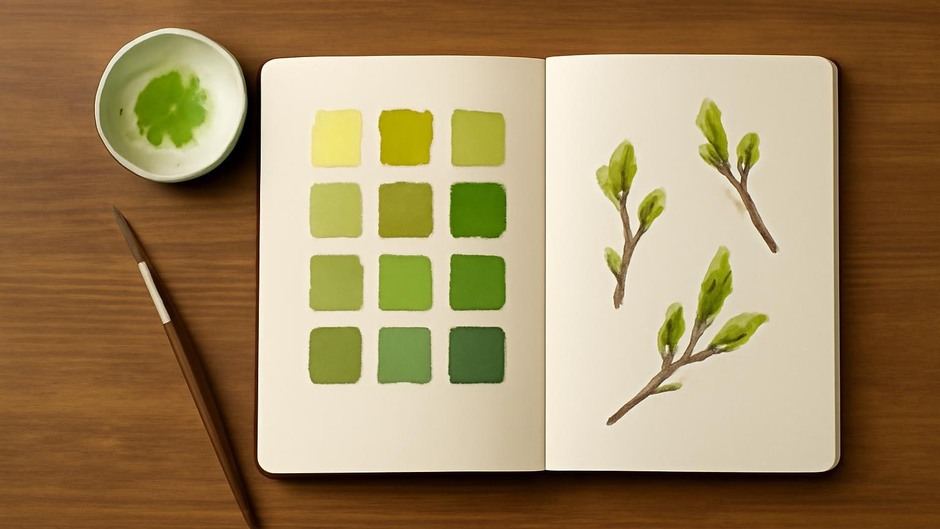
Grids divide a page into equal parts and are useful for systematic comparison: different specimens, progressive stages of a bud, or quick studies under varied light conditions.
- How to work: divide a page into a simple grid (for example, three columns by two rows) and assign a single variable to each box: different subjects, different times, or different media.
- When it helps: making side-by-side comparisons where consistent scale and placement aid observation.
Grids are practical for building series. They make it easier to see small differences because each square presents the subject in the same context.
Panoramic strips for extended observation
Panoramic strips are long narrow studies that capture horizontal movement across a scene. They are particularly good for shoreline studies, hedgerows, or any scene where lateral relationships are important.
- How to work: use a horizontal strip across the bottom or top of a page and record a continuous sequence, either by direct observation or by stitching several quick views together.
- When it helps: when you want to emphasize spatial relationships and rhythm along a horizon or boundary.
Panoramic strips force selective compression: you decide which elements to include and which to omit, that act of selection is instructive in itself.
Using the frameworks together
These frameworks are not mutually exclusive. A field routine might begin with thumbnails to explore possible crops, use a grid for a sequence of quick studies under differing light, and finish with a panoramic strip to situate the study within a broader landscape context. The three frameworks together offer a balance between experimentation, comparison, and continuity.
One practical exercise is to choose a subject and spend forty-five minutes working through all three frameworks on the same page. Limit the time per thumbnail and per grid cell. The constraint produces a focused page and encourages decisions that reflect the scene rather than indecisive accumulation.
Compositional frameworks make sketchbooks more legible and usable. They provide a consistent structure for seeing and returning to observations later. Over time, the habit of choosing a simple framework before drawing speeds decision-making and makes the sketchbook a clearer record of evolving perception.