Seasonal colour notes: observing vernal shifts
Seasonal colour notes: observing vernal shifts
Spring is a slow choreography of colour: the first pale greens, the blush of buds, the soft greys of lingering winter light. To notice these transitions deliberately, try three compact approaches that suit short field visits: small palette studies, direct colour matching, and timed swatches. Each method trains different perceptual habits and yields different documentary records.
Small palette studies
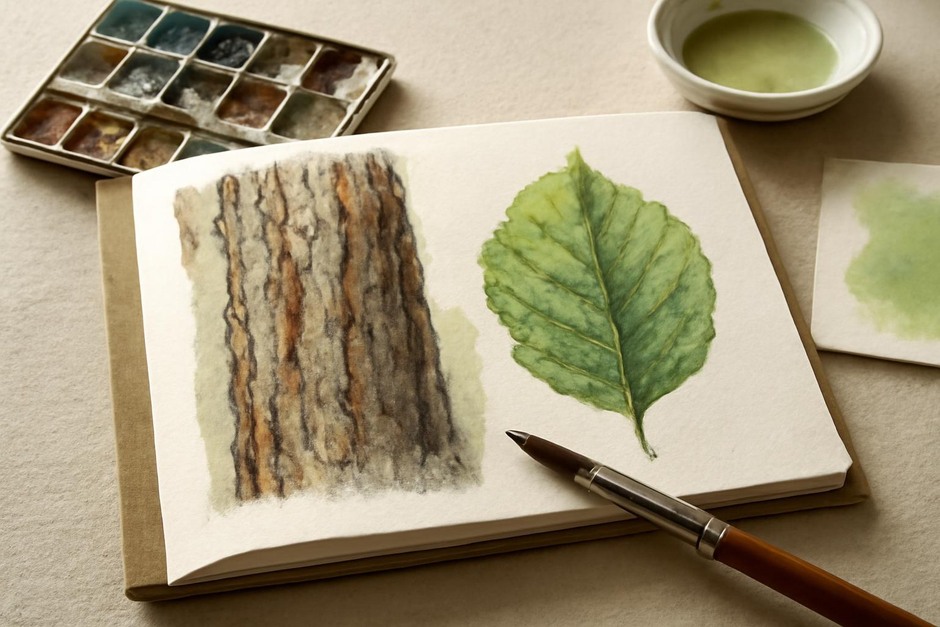
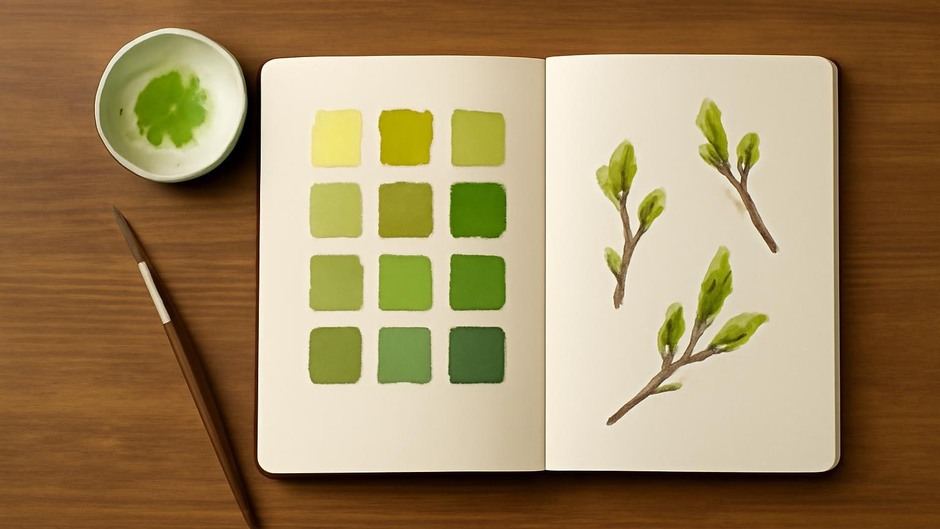
A limited palette helps you focus on relationships between nearby colours rather than chasing infinite variations. Choose three to five pigments you can mix reliably to represent a range of early-spring tones: for example, a muted yellow, a warm green, a cool blue, a soft brown, and a neutral grey.
- How to work: mix small patches on a page to match leaves, shoots, and sky. Note which mixes best describe the subject and keep a running note of ratios or observations.
- What it trains: understanding of mixing relationships and the restraint to describe rather than recreate every nuance.
Small palette studies are helpful in the studio as well; they distill the colour vocabulary of a site into a usable set that can be extended later.
Direct colour matching
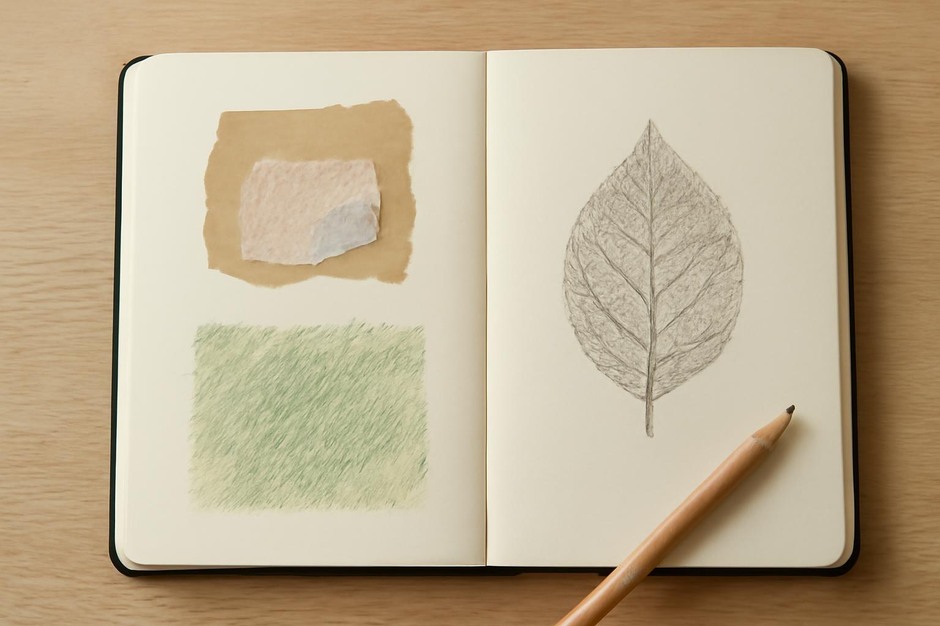
Direct matching is a practical habit: bring a small strip of paper or a portable swatch card and place it against the subject to choose the closest visual match. This is about training the eye to prioritize immediate chroma and value rather than remembered names.
- How to work: make quick swatches in situ—small painted patches or punched paper bits—and annotate them with light notes about time of day and temperature.
- What it trains: the ability to reduce visual complexity to distinct colour samples you can recall or reproduce later.
Direct matching can be used alongside small palette studies. For instance, use matches to refine palette selections or to note outliers that fall outside the limited set.
Timed colour swatches
Colour changes can be subtle but measurable over short periods. Timed swatches are an exercise in watching a moment unfold: commit to making a swatch every fifteen minutes for an hour, focusing on a single bud or small patch of ground.
- How to work: set a discreet timer and create small uniform swatches in a vertical strip, noting the interval next to each patch.
- What it trains: attention to change and an awareness of how light shifts affect perceived hue and value.
This method is particularly revealing on days with frequent cloud breaks where the same subject can read very differently under varied illumination.
Putting the methods together
Use these three approaches in combination during several short visits in early spring. A typical session might begin with timed swatches to calibrate your immediate perception, then a set of direct matches for notable colours, and finish with a small palette study that abstracts the scene into a working palette.
Each method contributes a different kind of record. Timed swatches map temporal shifts, direct matches anchor perception to discrete samples, and small palettes translate those observations into mixtures that can be used in later paintings or notes. None should be taken as exclusive. Instead, try alternating them across different days and conditions to see which combinations best support your memory and later studio decisions.
Over a season, these short studies form a useful archive. They create a series of comparative points that show how a single patch of landscape evolves. The practice is modest in scale but cumulative in value: repeated attention to very small colour differences builds a more nuanced seasonal vocabulary in your sketchbook.